Neighborhood associations are vital to Community Builders of Kansas City’s stakeholders. Beyond fostering a strong sense of community, they advocate for better housing, reduced crime and economic opportunity. This article is part of a two-part series and features just a few of the many important and innovative works of two of these groups – the Santa Fe and Blue Hills neighborhood associations.
Preserving Heritage in Santa Fe
Marquita Taylor has made it her goal to preserve the rich history of the Santa Fe neighborhood. As president of the Santa Fe Area Council, which represents the area located from 27th St. to Linwood and Prospect to Indiana widely known as the first planned neighborhood that Black families could move into in the 1950s.
“We have homes in devastating conditions, some without kitchens, proper bathrooms and major structural damage because of disinvestment,” Taylor explained. “And after appealing to the city and anyone else who’d listen, it was suggested to us to seek Central City Economic Development (CCED) Sales Tax District funds. Our residents were diligent in calling the city to request resources for the neighborhood and we ended up being awarded funding to address health and safety issues, along with structural damages in the aging homes.”
Taylor expressed appreciation to the CCED, City of Kansas City, Missouri, Community Capital Fund, Legal Aid of Western Missouri and Arvest Bank who helped bring together the project. Most importantly, she and the Santa Fe Area Council thank the residents of Santa Fe for their patience and support throughout the process. There are currently more than 10 homes under contract for rehabilitation and the council hopes to obtain additional funding.
In another Santa Fe Area Council initiative, the group was selected to work with KC 360, a division of KC Common Good that convenes community organizations, city government, businesses and the Kansas City, Missouri Police Department to address the root causes of crime in a specific neighborhood. The program is based on a model in Omaha that reduced violent crime by 70 to 80 percent.
She said addressing crime is key to maintaining home ownership. “All our programs are aimed at helping Santa Fe homeowners stay in their homes,” Taylor explained. “Our owners are inundated with people trying to buy their homes, and if they can’t afford to fix it up and are living in a high crime area, they’re going to be forced to sell. Many families in Santa Fe want to keep their homes for generational wealth and have joined our fight to eliminate blight and improve the lives of the people who call Santa Fe their home.”
Taylor expresses that the success of the council is dependent on the many community entities that have helped advocate for the Santa Fe neighborhood.
“The organizations, individuals, nonprofits and partners that give me counsel … without them none of this would have come to fruition,” she said. “My hope is to be able to continue to live in the community I’ve lived in for 30 years and feel safe coming out of my house.”
From Blight to Beautiful
In the Blue Hills neighborhood located between 47th and 63rd streets and Prospect and The Paseo, the Blue Hills Neighborhood Association works diligently to keep the area safe, clean and free of vacant lots and to provide as many resources as possible to its neighbors.
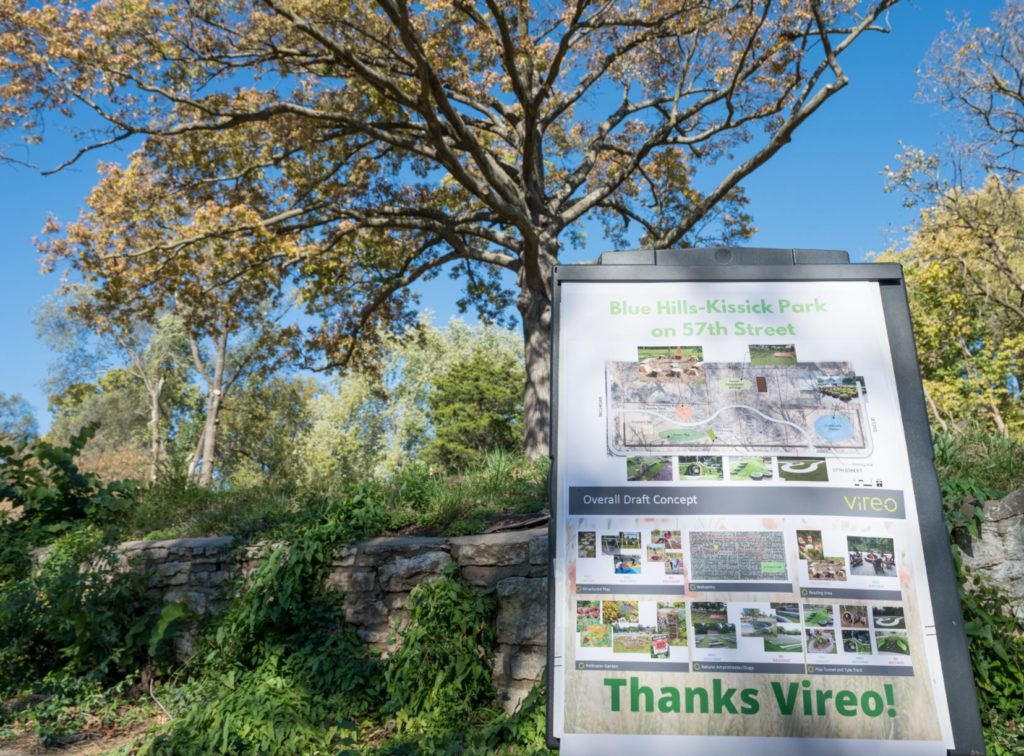
Through its “Blue Hills Beautiful” initiative, the association purchased four empty and blighted lots and, with the help of community partners and the residents, transformed them into Blue Hills-Kissick Park. They approached longtime partner Kissick Construction, whose founder, Jim Kissick, was an avid supporter of the area and had recently passed away, offering to dedicate the park in his honor.
Home Depot, another association partner, provided supplies and employee volunteers. A grant from AARP helped furnish solar lighting and US Toy donated climbing equipment. Additionally, the association applied for and received a Local Initiative Support Corporation grant that contributed to the beautification project.
Another blighted lot was repurposed into Putters Park and features three putting greens, disc golf and a pollination garden for birds and bees along the periphery.
Beyond the park initiatives, Blue Hills has collaborated with local schools, churches and non-profits to provide dental appointments, financial literacy and leadership classes and voter advocacy programs. Convening partners and resources to impact positive change is at the heart of everything they do.
Stay tuned to the Q2 CBKC Newsletter for more about the work of neighborhood associations.