Community Builders of Kansas City led the pursuit which has secured funding for the feasibility study required by the city on the installation of pedestrian crossings along the newly renamed Martin Luther King, Jr. Boulevard
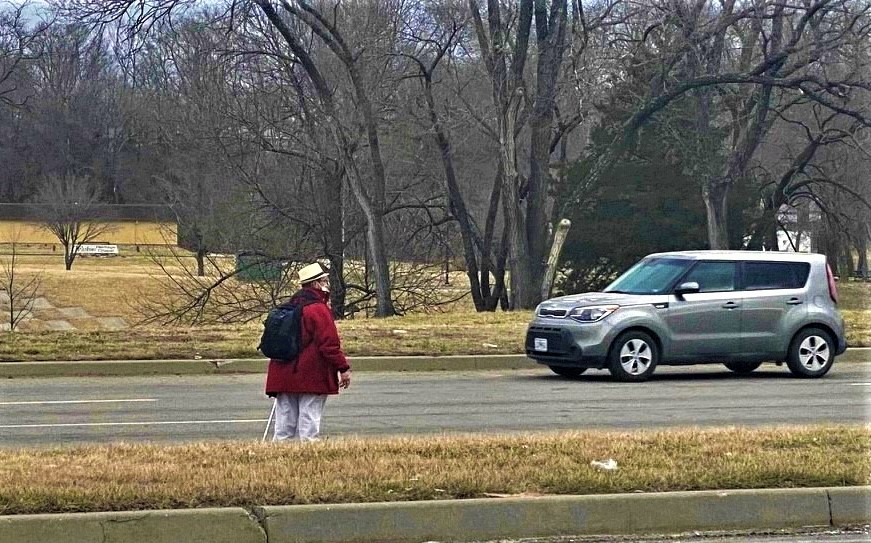
“Out of a 2017 Swope Parkway/Blue Parkway Feasibility Study, residents identified safe pedestrian crossings as a top infrastructure priority along this corridor,” said Elizabeth Schultz, CBKC’s director of strategic initiatives and community development. “There are zero mid-block pedestrian crossings and just two intersections with traffic signals in the two-mile stretch along this corridor, which is clearly insufficient to provide safe places for residents to cross this busy thoroughfare. Daily I observe people stranded in medians or dangerously attempting to cross the street despite on-coming traffic.”
In recent years, CBKC has submitted PIAC project applications directly and worked alongside multiple neighborhood groups to help them optimize their submissions to PIAC. Out of more than 20 projects submitted over the 2019-2020 period, just six projects were funded – three of which were for parkway tree plantings restoration – an unmet Parks and Recreation Dept. Parkways and Boulevards standard requirement.
“In 2019, there was more than $500 million in requests for PIAC funding and in 2020 the requests doubled to more than $1.3 billion,” said Elizabeth Schultz. “There is just too much demand for too little money.”
In the 2019 funding year, Araceli Magana, PIAC administrator, said as much in a letter, “PIAC reviewed each one of the 881 requests received from across the city. The dollar value of all requests totaled $538,092,297 which made the task of putting the projects in priority order difficult.”
PIAC’s duty at its establishment in 1983 was to direct one percent of the city’s sales tax revenue to public improvement projects requested by residents. The sales tax generates about $70 million a year which was to be set aside for projects proposed by citizens or neighborhood organizations addressing needs that can range from traffic signal to storm water management improvements
Ballot language for the 2018 renewal of the 20-year tax included allowing the city’s share for the cost for replacement of the Buck O’Neil Bridge to come from PIAC funds. The city’s public works and parks and recreation department also have submitted applications for PIAC funds to pay for its initiatives. Since its inception, more city departments are using PIAC as a funding tool and are advising residents to submit neighborhood maintenance requests through this portal rather than doing repairs and replacements as part of the city’s duty to maintain basic public infrastructure.
“PIAC’s original intent was to support funding of public improvements identified and initiated by neighborhoods,” said Schultz. “It has morphed into another tool for the city to fund the gap in its own projects, often those that have little to do with the intended use of PIAC funds. That makes it incredibly challenging for any of these neighborhood-initiated and desired projects to see the light of day.”
The PIAC funding was not enough to pay for the pedestrian crossing study so CBKC teamed up with the city’s public works department to successfully pursue a MARC Planning Sustainable Places grant. Now, Schultz said, the design team is in place working with various city departments, MARC and community stakeholders to do the work to recommend the safest and most economical option – one that has the highest likelihood of having city, state and federal funding allocated for the installation.
“CBKC hopes that all of this effort to date will receive continued support,” said Emmet Pierson, CBKC president and CEO. “That is essential to meet our community’s high expectations in transforming the former Swope and Blue Parkways to a standard that appropriately memorializes the boulevard for Martin Luther King, Jr.”