

Part of the CBKC mission is to grow our organizational capacity so that we might carry out our other strategic goals – develop an entrepreneurial business model, continue to grow our financial strength, empower our community and share what we learn with others. In October, we had the opportunity to share what we have learned and accomplished with others as part of a panel on how Power Shapes the Built Environment at the National Organization of Minority Architects (NOMA) Year 50 Conference in Detroit.
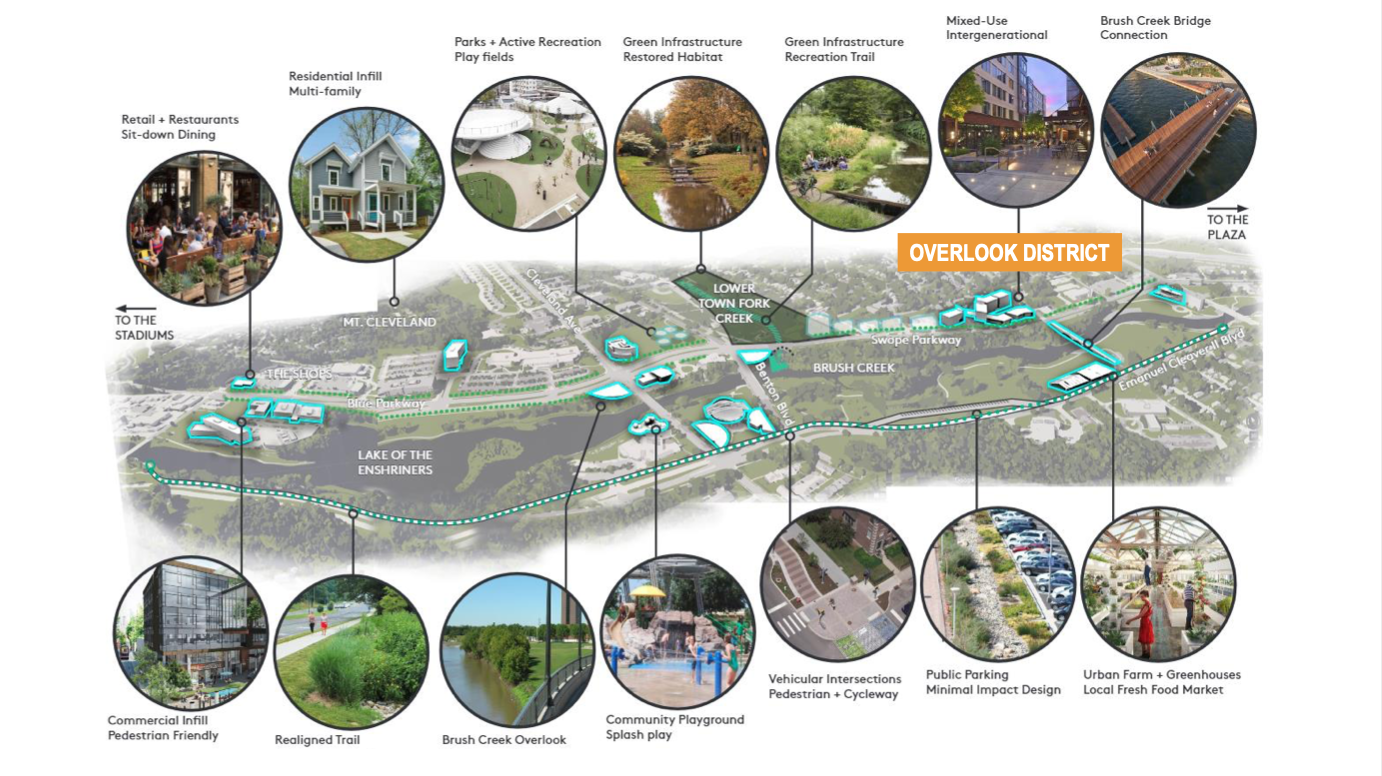
In 2020, a Business Journal editorial addressed CBKC’s Offices at Overlook – the $80-plus million mixed-use property on 11 acres that will transform the corner of Swope Parkway and Chestnut Avenue – stating that the project, “… provides a way for the nation, the city and businesses to do more than just talk about opportunity, equality and justice.” 1
How did CBKC get to where we are today, with the first phase of the Offices at Overlook and The Rochester multi-family project representing $42 million in projects currently underway? In part, it has been through advancing the understanding of the difference between equality, equity and justice as well as growing our own understanding of the many facets of power and its role in the built environment.
Emmet Pierson, Jr., CBKC president and CEO, joined Triveece Penelton, city planner and public involvement innovator; Jeff Williams, director of city planning and development with the City of Kansas City, Mo.; and Phil Dougherty, associate vice president with Slaggie Architects and NOMA KC president, in the NOMA conference presentation which laid the groundwork on how Power Shapes the Built Environment with an exploration of what power is – “… control over valued outcomes or resources…”
The discussion moved through the protective versus withholding role of barriers and their intergenerational impact on planning practices – interstate highway system, restrictive zoning, redlining / Federal Housing Act, restrictive covenants, urban renewal – as well as intergenerational inequity and property loss with more than a dozen exclusionary treaties and congressional acts just through the 1930s and 40s.
For NOMA’s architects in attendance the lesson was in the power they have to acknowledge the barriers, educate those affected and challenge those in entrenched power. It also was about the power of long-term planning to develop and leverage a neighborhood-focused plan as CBKC has done with its Mt. Cleveland Initiative. Started in 1993, the Mt. Cleveland development plan established a successful track record of completion and performance. It continues, now embracing a diversity of elements that have credibility and a future because of what has been accomplished to date.
The panel offered in parting the steps for helping shift the power:
- Recognize the power issues in planning, architecture and development.
- Acknowledge how oppression and difference (racism) have shaped planning, architecture and development outcomes.
- Do something about the barriers.
- Opt-in for hard decision making and prioritizing when it comes to investing in and working with BIPOC (Black, Indigenous and People of Color) communities.
- Build new relationships with those willing to explore and try new approaches.
- View BIPOC communities as assets.
- Become a partner, resource and ally.
- Open the door to broader, more diversified and inclusive collaboration and investment.
1 Kansas City Business Journal, Editor’s Briefing: $84 million project puts money behind talk of expanding diversity, opportunity. Aug. 22, 2020