Latest News
SNAP Up Double Savings at Sun Fresh Stores

Shoppers at Community Builders of Kansas City-owned Sun Fresh stores can now double their Supplemental Nutrition Assistance Program (SNAP) dollars on fresh vegetables and fruit with the Double Up Food Bucks program. The program is easy to use and available at KC Sun Fresh on the Boulevard, 4209 E. 50th Terr., and KC Sun Fresh at Linwood, 3110 Wabash Ave., both in Kansas City, Missouri. Shoppers can use their SNAP EBT Card to buy fresh vegetables and fruit and earn one free Double Up Food Bucks for every dollar spent, up to $25 per day. Reward dollars can be used to buy additional fresh fruits or vegetables on a future visit to the same store. Users must have a rewards account to participate.
Laura Hohlbaugh, chief retail operations officer for CBKC Eats, CBKC’s subsidiary responsible for bringing healthy food to Kansas City’s urban areas, shared that the team is enthusiastic about what the program offers customers as well as the community.
“One of our KC Sun Fresh at Linwood team members owns and operates George Washington Carver Farm at 37th St. and Chestnut Ave. in the heart of Kansas City’s East Side, and both KC Sun Fresh stores are sourcing produce from it,” she said. “With this program, we are helping strengthen and support our community every way we can – supporting the local vendor who’s on our team while offering healthy options for less money to our guests.”
Double Up Food Bucks is a national program for anyone receiving SNAP benefits created by Fair Food Network, a nonprofit with the mission to grow community health and wealth through food. From farms to families, Double Bucks helps improve health, stimulate local economies and increase opportunities. The program was piloted in Detroit in 2009 before expanding across the country. Today it is offered in more than 25 states, including Kansas and Missouri, at more than 900 participating farmers markets, farm stands and grocery stores.
The program was brought to Kansas and Missouri by the Double Up Heartland Collaborative, a partnership comprising Cultivate Kansas City, Kansas State University Research and Extension, Mid-America Regional Council, West Central Missouri Community Action Agency, University of Missouri Extension and University of Kansas Medical Center. Over 1.1 million Kansas and Missouri residents rely on federal food assistance through the SNAP program, and Double Up Food Bucks makes it easier to eat fresh fruits and vegetables while supporting family farmers and growing local economies.
The Double Up Food Bucks – Heartland program began by offering a nutrition incentive program to SNAP customers at Kansas and Missouri farmers markets and grocery stores between 2016-2019 as part of a United States Department of Agriculture Food Insecurity Nutrition Incentive (USDA FINI) grant. Funding totaled a combined $5.8 million dollars from the USDA and private and public funders throughout the region. Nearly $2.5 million of incentives were redeemed by SNAP customers during that time.
After the first grant, Double Up Food Bucks was funded in Kansas and western Missouri by private and public funders for January-September 2020. Just under $360,000 of incentives were redeemed during the nine-month period.
Starting in October 2020, the program was again funded from the USDA FINI, renamed Gus Schumacher Nutrition Incentive Program (GusNIP), grant and private match totaling $8.1 million that will last through 2024.
Today, Double Up Food Bucks is available at more than 80 locations in the bi-state area. The program’s success is rooted in partnerships – with the public, private and nonprofit funders, the statewide organizations who help extend its impact with outreach and complementary programming and the local markets who bring it to life in their communities.
“With the Double Up Food Bucks program, our families bring home more healthy food, our local farmers make additional money and increased food dollars stay in the local economy, all of which strengthens our communities,” said Hohlbaugh. “It really is a win-win program.”
Neighborhood Associations are Essential to Urban Communities – Part II
Neighborhood associations are vital to Community Builders of Kansas City’s stakeholders. Beyond fostering a strong sense of community, they advocate for better housing, reduced crime and economic opportunity. This article is the second of a two-part series featuring just a few of the many important and innovative works of Key Coalition and Oak Park neighborhood associations.
Housing is Key for Key Coalition
Karen Slaughter was elected to a one-year temporary term as president of Key Coalition Neighborhood Association in 2009. Fourteen years later she is still there. Slaughter and the coalition advocate for the area from 27th to 35th streets and Prospect to Woodland. As with other East Side neighborhood associations, Key Coalition has identified the need for affordable housing as a top priority. The organization has been able to collaborate with partners to offer several innovative housing options.
“We worked with the city of Kansas City, Missouri, to develop a prototype of affordable housing that, while being a new build, matches the original shirtwaist architectural style of the homes in the neighborhood,” said Slaughter. “It was important to us that the new homes blend in with the existing housing. The homes are also unique in that most affordable housing are multi-family rentals and these are single-family, owned homes.”
Key Coalition came up with an idea for townhomes across the street from the Kansas City Missouri Police East Patrol Campus at 27th St. and Prospect Avenue and was able to secure a partnership with the city to bring it to fruition. There are currently four townhomes built that are owned instead of rented which is important for maintaining property value. Slaughter said there are an additional four townhomes planned for 27th St. and Brooklyn Avenue. Additionally, they are working with another developer to build housing behind the Kansas City Public Library at 30th St. and Prospect Avenue.
Key Coalition has been able to engage community partners on non-housing initiatives, including its long-standing relationship with Kansas City Public Library. The group supported the 2009 $1.3 million renovation of the Lucile H. Bluford Branch of the Kansas City Public Library at 3050 Prospect Ave. and supports the location’s current expansion.
“Our partnership allows us to be involved in ensuring good programming at the library,” shared Slaughter. “Library staff are more knowledgeable about its patrons’ needs but they engage us to share what our neighbors want. We’re also enlisting our residents to provide input on how the expansion space should be utilized.”
Key Coalition partnered with Kansas City Parks and Recreation planners to add $1.2 million in amenities to Spring Valley Park, located at E. 28th St. and Spring Valley Drive, and secured funding through the city’s Public Improvements Advisory Committee. Additionally, when home values started rising, threatening to push out some of the existing homeowners, the group completed an urban renewal plan that provided homeowners a 10-year tax abatement for completing $5,000 worth of home improvements.
Oak Park Seeks Partners for Initiatives
When Forest Tyson, Jr., vice president of Oak Park Neighborhood Association, speaks about his residents, you can hear the passion in his voice.
“We need new affordable housing that won’t gentrify the neighborhood; that’s our main focus right now,” he said. “And what our neighbors can afford is $700-$800 a month, not the $1,600 monthly rent that the state defines as affordable.”
Tyson, who was born and raised in the area that spans from 31st Street to Emanuel Cleaver II Blvd. and from Prospect Ave. to Jackson Ave., has coached basketball there for 20 years and has been with the association for 10 years. He explains that there are no new housing options that are affordable in the Oak Park area. Most of the homes are 70 years old, so renovating to make the structures livable is cost-prohibitive for most residents, a combination of renters and fixed-income elderly.
Tyson explained that to fix the problem, the association needs an infusion of up-front capital to rehab the older homes or build new ones, which has been difficult to attain.
“When you ask for funding, the city (city of Kansas City, Missouri) is good with reimbursable grants, but we don’t have the money to spend up front,” he said. “Plus, grants are hard to apply for and we don’t have the staff or time to complete the paperwork, jump through procedural hoops and deal with the politics involved.”
Tyson said that without government assistance, they are turning to assistance from the private sector. “We’re looking for partners,” he said. “We have access to contractors, rehabbers, electricians, plumbers and other laborers, but not the money to pay them.”
Unlike the Key Coalition, that has been able to leverage the catalytic investment made by the police and library, Oak Park sits in an area that has not had the benefit of major outside investment.
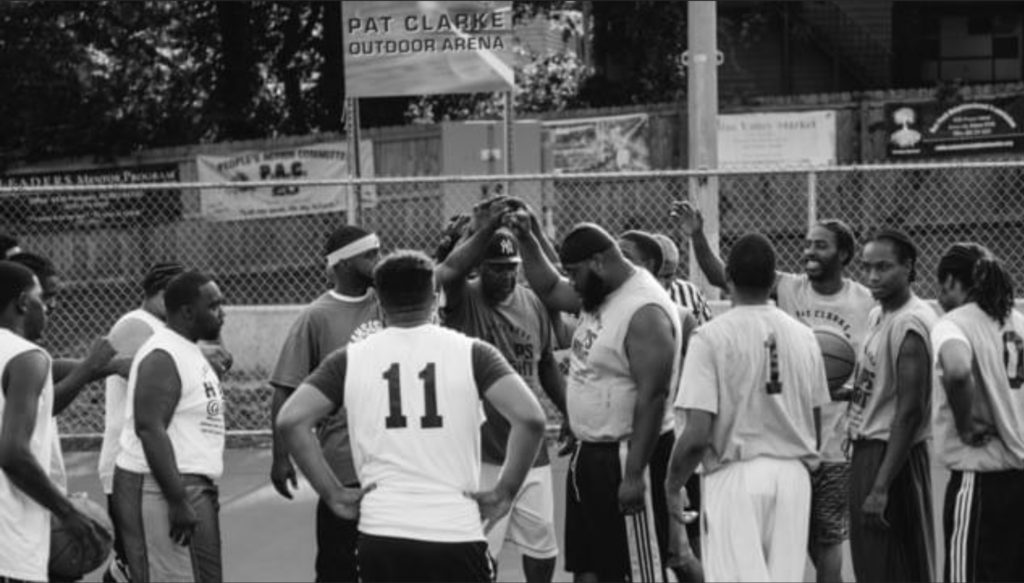
Tyson said that in addition to affordable housing, another top priority for Oak Park is crime prevention. Pat Clarke, association president, created Hoops at Night, a basketball league that plays under the lights at the Oak Park basketball courts throughout the summer. This year marks the eighth year of the program. Clarke has a long-term vision of building an entertainment center with a bowling alley, water park and other things for kids to do as well.
“We have to keep the kids busy in order to deter crime,” said Tyson. “We are asking the Kansas City Public School District to allow kids to use the vacant gym space in the summer to play basketball and other sports.”
In the past, the Kansas City Police Department dedicated four officers who met weekly with Oak Park Neighborhood Association leadership, who shared what they had heard from their contacts about potential crime. The officers then personally met with the parties involved to ward off crime. Tyson said it worked and they hope to work with the department in a similar way again.
Third on Oak Park’s agenda is keeping the neighborhood clean and free of trash dumping. Tyson said they partner with city administration on a program called Engineering Neighborhood Jobs and Opportunities for Youth (ENJOY). The city pitches in a stipend that the association uses to pay people for picking up trash.
“We continue to search for partnerships with the city, churches, school or community, to bring players to the table and find creative ways to address the housing, crime and dumping that plague our neighborhoods,” Tyson said.
CBKC Earns Capstone Award for The Rochester
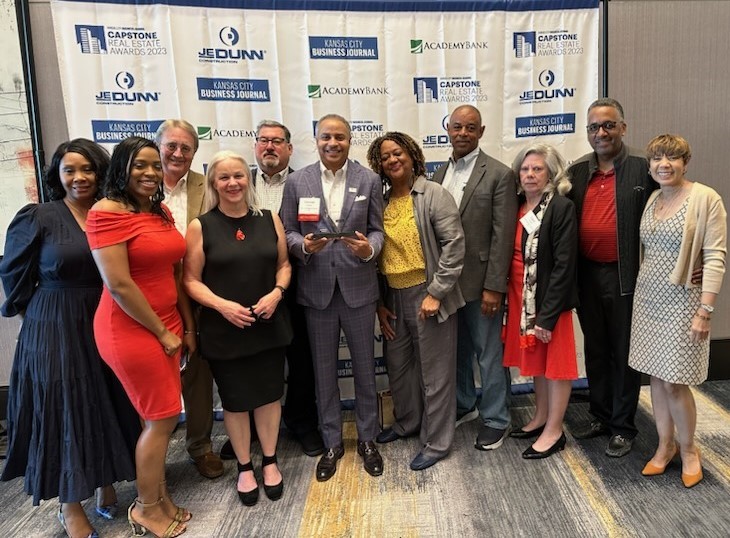
Community Builders of Kansas City in April took home a Capstone Award for The Rochester at The Business Journal’s annual ceremony honoring the 26 top real estate and development projects in the Kansas City area.
According to The Business Journal, “In 2023, submissions for Capstone Awards were stacked, and the competition was fierce. The projects completed in 2022 were innovative, compelling, groundbreaking, transformative and important to the landscape of Kansas City.”
The Rochester won a Capstone Award in the multi-family category. Judges noted The Rochester’s community impact, as it is believed to be the first market-rate multi-family developed east of Prospect Avenue in more than two decades.
“Most Kansas City multifamily projects are built in other areas where investment and lending are less of a gamble,” explained Pierson. “Community developers like CBKC consider factors beyond economic outcome, evaluating the needs and wellbeing of a community and the social impacts the project will have on it.”
Located at 3949 Dr. Martin Luther King Jr. Blvd., the 80,000-square-foot project valued at $13.5 million was designed as a multigenerational housing option.
“Units and common spaces are designed for group socializing rather than individual spaces, and its location was strategically selected,” he said. “The Rochester co-locates the swagger of a trendy rooftop deck equipped with a robust sound system alongside traditional transit, restaurants, grocery, and social service amenities.”
The four-story, 64-apartment complex is named after “Rochester” Charles “Chuck” Gatson, the late former president of CBKC. Modern finishes like stainless steel appliances, solid-surface countertops, modern lighting and manufactured hardwood flooring lend the residences a high-end feel. The roof boasts an indoor/outdoor rooftop deck and outside, landscaped front and back yard spaces come furnished for grilling and gathering around the fire pit.
CBKC thanks its partners for their role in bringing The Rochester to life: Artin Engineering & Design, Central Bank of Kansas City, City of Kansas City, Planned Industrial Expansion Authority, Custom Engineering, FSC Consulting Engineers, Hardwick Law Firm, Hufft, Land3 Studio, LISC Kansas City, Partners for the Common Good, Simmons Bank, Straub Construction and Taliaferro & Browne.
The Capstone Awards, started 18 years ago, are given to architects, brokers, contractors, developers, financiers and engineers and comprise the following categories: adaptive reuse, architectural design, community impact, industrial, mixed-use, multifamily, office, retail, sustainability and transaction.
Offices at Overlook Signs Health Forward Foundation to the District
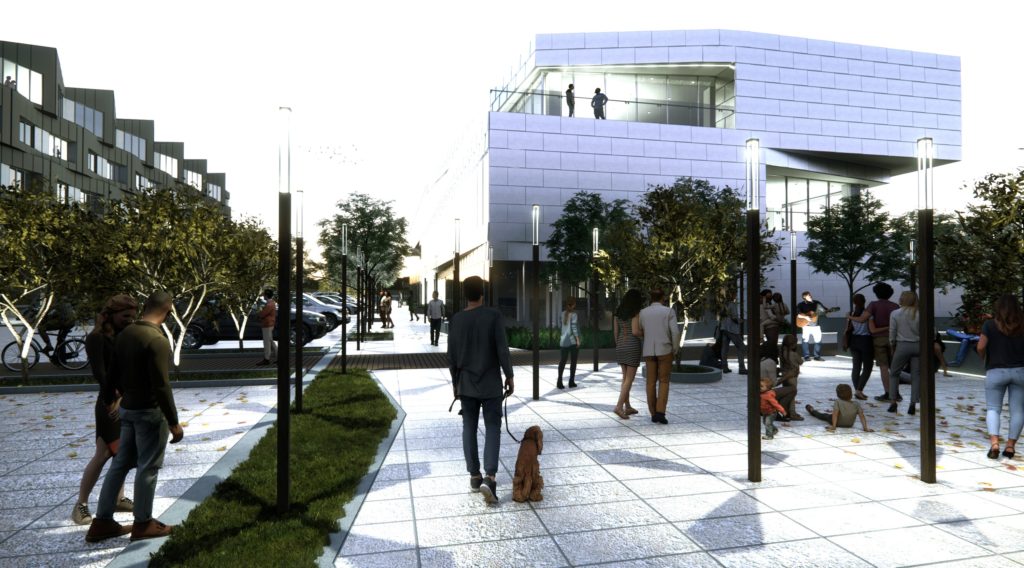
Community Builders of Kansas City brings Health Forward Foundation, a Kansas City-based nonprofit that seeks to build inclusive, powerful and healthy communities characterized by racial equity and economically just systems, will own and occupy 20,000 square feet on the third floor of the 64,000-square-foot Class A commercial building located at Dr. Martin Luther King Jr. Blvd. and Chestnut Ave.
“It was important to Health Forward, as we determined a permanent location for the foundation, that we invest in the economic vibrancy that exists among our prioritized communities of focus,” Health Forward CEO Qiana Thomason said. “For many years, there has been disinvestment in 64130 and while the area is classified as blighted, the blight does not reflect the power, the cultural wealth, the legacy, the resiliency and the resourcefulness of the people who live there and in the surrounding ZIP codes. We want to help restore, revitalize and rejuvenate this community by being an economic anchor and investor with Community Builders.”
The building Health Forward is occupying is the first of the multi-phase Offices at Overlook District that will transform underused and blighted property into 180,000 square feet of Class A office space, 19,000 square feet of mixed-use space and 155 multi-family units. Other features will include a health and wellness walking trail and outdoor event plazas, making the development another first of its kind in the area.
Demolition and site clearing on the project began last spring and site infrastructure, including the walking trail, will be complete this quarter. Construction on the $30 million office building is expected to begin by the end of this year with completion in 2025. The project team includes Turner Construction as general contractor, Hufft and Helix Architecture + Design as architects, Taliaferro & Browne Inc. as civil engineer and Land3 Studio LLC as landscape architect.
Neighborhood Associations are Essential to Urban Communities – Part I
Neighborhood associations are vital to Community Builders of Kansas City’s stakeholders. Beyond fostering a strong sense of community, they advocate for better housing, reduced crime and economic opportunity. This article is part of a two-part series and features just a few of the many important and innovative works of two of these groups – the Santa Fe and Blue Hills neighborhood associations.
Preserving Heritage in Santa Fe
Marquita Taylor has made it her goal to preserve the rich history of the Santa Fe neighborhood. As president of the Santa Fe Area Council, which represents the area located from 27th St. to Linwood and Prospect to Indiana widely known as the first planned neighborhood that Black families could move into in the 1950s.
“We have homes in devastating conditions, some without kitchens, proper bathrooms and major structural damage because of disinvestment,” Taylor explained. “And after appealing to the city and anyone else who’d listen, it was suggested to us to seek Central City Economic Development (CCED) Sales Tax District funds. Our residents were diligent in calling the city to request resources for the neighborhood and we ended up being awarded funding to address health and safety issues, along with structural damages in the aging homes.”
Taylor expressed appreciation to the CCED, City of Kansas City, Missouri, Community Capital Fund, Legal Aid of Western Missouri and Arvest Bank who helped bring together the project. Most importantly, she and the Santa Fe Area Council thank the residents of Santa Fe for their patience and support throughout the process. There are currently more than 10 homes under contract for rehabilitation and the council hopes to obtain additional funding.
In another Santa Fe Area Council initiative, the group was selected to work with KC 360, a division of KC Common Good that convenes community organizations, city government, businesses and the Kansas City, Missouri Police Department to address the root causes of crime in a specific neighborhood. The program is based on a model in Omaha that reduced violent crime by 70 to 80 percent.
She said addressing crime is key to maintaining home ownership. “All our programs are aimed at helping Santa Fe homeowners stay in their homes,” Taylor explained. “Our owners are inundated with people trying to buy their homes, and if they can’t afford to fix it up and are living in a high crime area, they’re going to be forced to sell. Many families in Santa Fe want to keep their homes for generational wealth and have joined our fight to eliminate blight and improve the lives of the people who call Santa Fe their home.”
Taylor expresses that the success of the council is dependent on the many community entities that have helped advocate for the Santa Fe neighborhood.
“The organizations, individuals, nonprofits and partners that give me counsel … without them none of this would have come to fruition,” she said. “My hope is to be able to continue to live in the community I’ve lived in for 30 years and feel safe coming out of my house.”
From Blight to Beautiful
In the Blue Hills neighborhood located between 47th and 63rd streets and Prospect and The Paseo, the Blue Hills Neighborhood Association works diligently to keep the area safe, clean and free of vacant lots and to provide as many resources as possible to its neighbors.
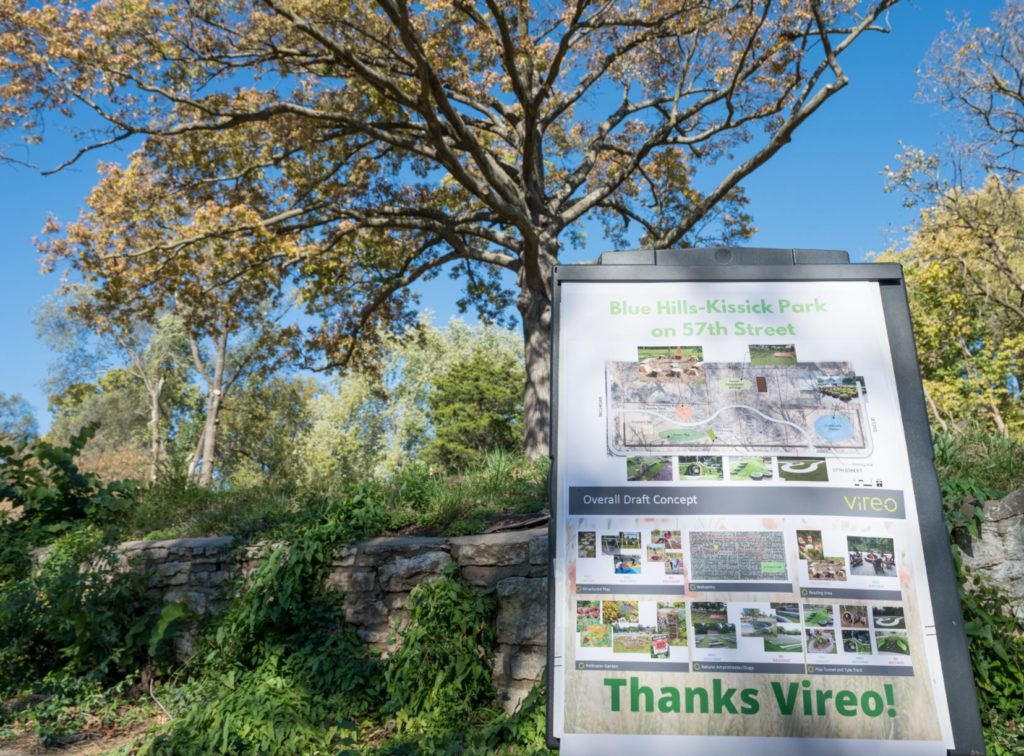
Through its “Blue Hills Beautiful” initiative, the association purchased four empty and blighted lots and, with the help of community partners and the residents, transformed them into Blue Hills-Kissick Park. They approached longtime partner Kissick Construction, whose founder, Jim Kissick, was an avid supporter of the area and had recently passed away, offering to dedicate the park in his honor.
Home Depot, another association partner, provided supplies and employee volunteers. A grant from AARP helped furnish solar lighting and US Toy donated climbing equipment. Additionally, the association applied for and received a Local Initiative Support Corporation grant that contributed to the beautification project.
Another blighted lot was repurposed into Putters Park and features three putting greens, disc golf and a pollination garden for birds and bees along the periphery.
Beyond the park initiatives, Blue Hills has collaborated with local schools, churches and non-profits to provide dental appointments, financial literacy and leadership classes and voter advocacy programs. Convening partners and resources to impact positive change is at the heart of everything they do.
Stay tuned to the Q2 CBKC Newsletter for more about the work of neighborhood associations.
For Three KC Sun Fresh Leaders, Serving Up Fresh and Delicious Foods is Job One
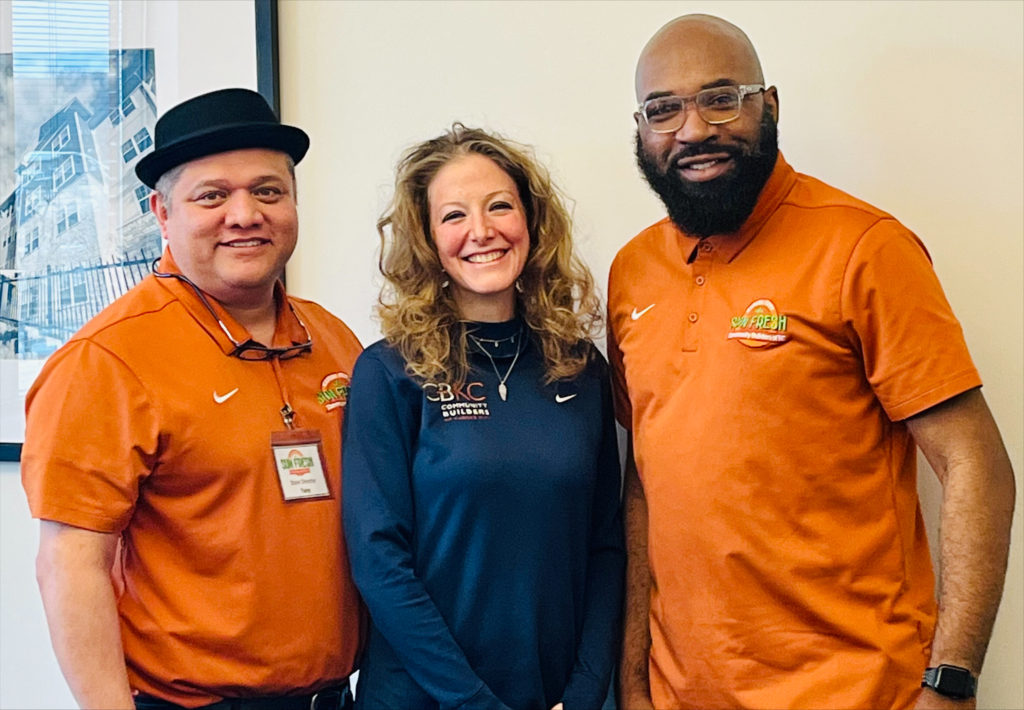
Community Builders of Kansas City has added three new employees to CBKC Eats, its subsidiary formed to provide healthy food options in underserved areas. It owns and operates KC Sun Fresh on the Boulevard located at 4209 E. 50th Terr. and KC Sun Fresh at Linwood, 3110 Wabash Ave. in Kansas City, Missouri.
Laura Hohlbaugh brings 16 years of experience working for Target Corporation where she managed one of the most successful stores in the company’s portfolio. She joins CBKC Eats as chief retail operations officer in charge of operations, sales performance, payroll planning, P&L, guest service, recruiting, training and onboarding. While the job description is similar to that at Target, the roles are anything but.
“At CBKC, there is a mission and I am working toward a purpose and doing good,” she explained. “Whereas my previous job was sales-oriented, I feel like here I’m more people-oriented. I’m developing and training employees and integrating with customers and community. Here you’re not just working towards a corporation’s bottom line; you’re working so that people have healthy food to put on their tables and feed their families, and that motivates me.”
Additionally, she explained that coming to work on the East Side felt like coming home.
“My family has owned a business in this community since the 1970s and I worked there from fourth grade until college, so I really grew up in this area,” she said.
Hohlbaugh says her goal for both stores is to increase traffic and sales.
“We don’t need to turn a huge profit but we do need to keep the stores alive for employees and communities,” she said.
Olivier (O.T.) Kabuya has always had a strong desire to make a positive impact in the local community. That is why he joined CBKC Eats as store director for KC Sun Fresh on the Boulevard. He had followed CBKC’s work in the area and was impressed.
“The organization speaks for itself,” Kabuya said. “It is dedicated to building communities and has a 30-year track record to prove it.”
Kabuya also had two CBKC employees recruiting him. He worked with Hohlbaugh at Target and it was she who originally reached out about the position. Michael Dayton, assistant to CBKC’s president, has been a mentor to him for 20 years. The two met at church and Dayton took Kabuya under his wing, supporting him throughout his career. He also encouraged Kabuya to come work for CBKC. Kabuya said once he met Emmet Pierson, president and CEO, the deal was sealed.
“I was very impressed with Emmet,” he said. “It was clear right away that his passion for and commitment to this community are unparalleled.”
As store director, Kabuya is charged with planning, day-to-day operations and executing strategies that ensure the store’s efficient operation and set the foundation for CBKC Eats to grow and expand.
Kabuya is originally from the Democratic Republic of Congo and has lived in the U.S. since 1994. He speaks seven languages fluently.
For Tony Gutierrez, the grocery business is in his blood. He started in the industry at the age of 16 as a sacker at Lipari Brothers Thriftway in Kansas City, Kansas. For the past 30 years he has worked his way up through various departments and roles, gaining experience in nearly every facet of the business. He brought that expansive experience to CBKC when CBKC took over the Lipari Bros. Sun Fresh store at the Linwood location in February of 2022.
Gutierrez is store director of KC Sun Fresh at Linwood, responsible for all departments, operations and sales. When in the store, he can be identified as the guy wearing a cool hat. Gutierrez shares that the Linwood store is doing well.
“Today we’re doing great — our store is beautiful; vendors tell me it looks better than some Johnson County grocery stores,” he said. “We have a good customer base because we always have what they need in stock and our selection is excellent.”
Gutierrez appreciates that his job and the store are integral to the community.
“If we weren’t here, this would be a food desert and that, along with my co-workers, is what gets me going every morning,” he said. “I know that the community and my employees depend on this store and that fuels me to work hard every day.”